
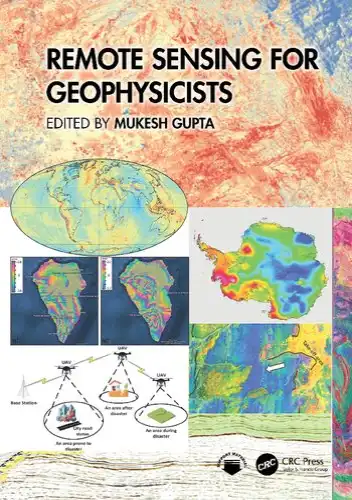
روشهای اکتشاف ژئوفیزیکی، روشهای بسیار گران و تهاجمی برای مطالعات هستند. روشهای سنجش از دور، روشهای غیرتهاجمی و بسیار ارزانتر برای بررسی سطح زمین میباشند. کتاب Remote Sensing for Geophysicists این شکاف را پر میکند و هدف آن یکپارچهسازی اکتشافات ژئوفیزیکی با سنجش از دور به عنوان روشی مقرون به صرفه است که اجرای آن برای اکتشاف در مناطق مختلف آسان است. این کتاب اطلاعات لازم را برای ژئوفیزیکدانان اکتشافی فراهم میکند تا از فناوری پیشرفته سنجشازدور در اکتشاف نفت و گاز، مواد معدنی و آبهای زیرزمینی استفاده کنند. یکپارچهسازی سنجش از دور در هر یک از نه روش اکتشافی را بر اساس بیش از ۱۱ مطالعه موردی از کشورهای مختلف جهان توصیف میکند.
ویژگیهای کتاب Remote Sensing for Geophysicists
- روشهای اکتشاف ژئوفیزیکی که ژئوفیزیکدانان اغلب استفاده میکنند را همراه با تکنیکهای مناسب سنجش از دور توصیف میکند.
- یک راهنمای جامع و سازمانیافته برای یافتن تکنیک مناسب سنجش از دور برای یک روش اکتشاف ژئوفیزیکی خاص ارائه میدهد.
- مطالعات موردی درباره اکتشاف نفت، گاز و آبهای زیرزمینی را با دستورالعملهای گام به گام با استفاده از فناوری سنجش از دور ارائه میدهد.
- به عنوان یک کتاب کاربردی میدانی برای ژئوفیزیکدانان اکتشافی که هرگز از سنجش از دور استفاده نکردهاند یا به ندرت استفاده میکنند، عمل میکند.
- به ژئوفیزیکدانان اکتشافی امکان میدهد دادههای سنجش از دور را برای ارزیابی اکتشافات پیچیده درک و تفسیر کنند.
این کتاب منبعی عالی برای متخصصان، پژوهشگران، دانشگاهیان و دانشجویان با پیشینه سنجش از دور در بسیاری از رشتههای علوم زمین مانند زمینشناسی، هیدرولوژی، سنگشناسی، معدن، جغرافیا، علوم زمین و غیره است.
مشخصات کتاب Remote Sensing for Geophysicists
- ویراستار کتاب: Mukesh Gupta
- سال انتشار: ۲۰۲۵
- ناشر: CRC Press
- زبان کتاب: انگلیسی
- تعداد صفحات: ۵۲۷
- کتاب ۳۲ فصل دارد.
- فرمت کتاب: pdf
راهنمای خرید: پس از تکمیل موفقیتآمیز فرآیند پرداخت، لینک دانلود فایل بهصورت خودکار در همان صفحه نمایش داده خواهد شد. در صورت بروز هرگونه سؤال یا مشکل، لطفاً از طریق صفحه «تماس با ما» با سایت در ارتباط باشید.
📚 نمایش فهرست مطالب کتاب
Cover
Half Title
Title Page
Copyright Page
Dedication
Table of Contents
Preface
Aims and Scope
Synopsis of the Book
About the Editor
List of Contributors
Part I Remote Sensing in Gravity Methods
1 Satellite Gravimetry for Geophysical Purposes
1.1 Introduction
1.2 Satellite Gravimetry
1.3 Global Gravity Field Models
1.4 Gravity Corrections
1.4.1 Bouguer Plate Correction
1.4.2 Terrain Correction
1.4.3 Sediment Correction
1.4.4 GIA Gravity Correction
1.4.5 Additional Corrections
1.5 Gravity Inversion and Data Enhancement Techniques
1.6 Isostatic State From Gravity Data
1.7 Conclusion
References
2 Assimilating GRACE Data Into a Hydrological Model: An Overview
2.1 Introduction
2.2 Hydrologic Models
2.2.1 Sources of Hydrological Model Uncertainties
2.3 GRACE. Data
2.3.1 GRACE Application for Hydrological Purposes
2.4 Data Assimilation
2.4.1 Hydrological Data Assimilation
2.4.2 Data Assimilation Filters
2.4.3 Satellite Data Assimilation Challenges
2.4.4 Applications and Case Studies
2.4.5 Challenges of GRACE DA
2.4.6 Multivariate Data Assimilation
2.5 Conclusions
References
3 Satellite-Based Geodesy
3.1 Introduction
3.2 History of Satellite-Based Geodesy
3.2.1 The Evolution of World Geodetic System
3.3 Geometric Satellite Geodesy
3.3.1 Satellite Positioning Systems
3.3.2 Figure of the Earth
3.3.3 GNSS Radio Occultation
3.3.4 Differential GPS
3.4 Satellite Physical Geodesy
3.4.1 Geoid Determination
3.4.2 Earth’s Gravity Determination
3.5 Tectonic Motion, Variations, and Deformation
3.5.1 Satellite Altimetry
3.5.1.1 Radar Altimetry
3.5.1.2 Laser Altimetry
3.5.2 SAR Interferometry
3.6 Applications of Satellite-Based Geodesy
3.7 Conclusion
References
4 A Brief History of GIA Research and Recent Advances Via Remote Sensing
4.1 Introduction – The Discovery of Glacial Isostatic Adjustment
4.2 Modeling Glacial Isostatic Adjustment
4.3 Observations for Estimating GIA
4.4 How GRACE Pushed GIA Research
4.4.1 The Problem of Source Separation
4.4.2 Insights Into GIA From Remote Sensing in the Last Decade
4.5 What Can We Expect in the Future?
References
Part II Remote Sensing in Magnetic Methods
5 Understanding Geomagnetic Environment From Satellite and Ground-Based Magnetometers
5.1 Introduction
5.2 Geomagnetism and Paleomagnetism
5.3 Brief History of Developments in Geomagnetism
5.4 Regions Within the Magnetosphere
5.5 Earth’s Internal Structure
5.6 Magnetometers
5.6.1 Variometer
5.6.2 Fluxgate Magnetometer
5.6.3 Induction Coil Magnetometer
5.6.4 Proton-Precession Magnetometer
5.6.5 Ionized Gas Magnetometers/Optically Pumped Magnetometers
5.6.6 Superconducting QUantum Interference Devices (SQUID)
5.7 Space and Airborne Magnetometry
5.8 Ground-Based Magnetometers
5.9 Discussion and Summary
References
6 Mineral Exploration Using Remote Sensing
6.1 Introduction: Background and Driving Forces
6.2 Overview of Mineral Exploration
6.3 Remote Sensing Datasets and Processing
6.4 Case Study: Mineral Potential Zones Mapping in Gadag, Karnataka, India
6.5 Conclusion and Future Scope
References
7 Monitoring the Ionosphere Using Remote Sensing Techniques
7.1 Introduction
7.2 Types of Observational Techniques
7.3 Remote Sensing Techniques
7.3.1 Remote Sensing Using Radio Waves
7.3.1.1 Ionosondes
7.3.1.2 Trans-Ionospheric Propagations
7.3.1.3 High-Frequency Doppler
7.3.1.4 Very Low-Frequency Propagation
7.3.1.5 Satellite Navigation
7.3.1.6 Global Navigation Satellite System (GNSS)
7.3.1.7 Riometer
7.3.2 Remote Sensing Using Scatter Radar Techniques
7.3.2.1 Coherent Scatter Radar
7.3.2.2 Incoherent Scatter Radar
7.3.3 Remote Sensing Using Optical Instruments
7.3.3.1 Light Detection and Ranging (LIDAR)
7.3.3.2 Airglow Instrument
7.4 Summary
7.5 Future Scope and Challenges
References
Part III Remote Sensing in Seismic Methods
8 Using Remote Sensing for Seismic Interpretation: A Case Study From Coastal Tanzanian Basin
8.1 Introduction
8.2 Remote Sensing Data and Interpretation
8.2.1 Remote Sensing in Geological Mapping
8.2.2 Remote Sensing Application for Geohazard and Hydrocarbon Resources Assessment
8.3 Seismic Interpretation
8.3.1 Seismic Interpretation: Assessment of Depositional Systems
8.3.2 Seismic Interpretation: Background and Exploration of Natural Resources
8.4 Combined Remote Sensing and Seismic Interpretation: Case Study
8.4.1 Combined SRTM DEM and Seismic Data
8.4.2 Combined GEBCO and Seismic Data
8.5 Conclusion
References
9 Remote Sensing for Studying Pre-Earthquake Phenomena
9.1 Introduction
9.2 Theories to Explain the Geo-Layers Interaction Before the Earthquakes
9.3 Remote Sensing to Study the Preparation Phase of the Earthquakes
9.4 A Cutting-Edge Tool to Access Geophysical Data: EPOS Platform
9.5 Example of Application to a Recent Case Study
9.5.1 The Morocco 2023 Earthquake
9.5.2 The Morocco 2023 Earthquake: Lithospheric Investigation
9.5.3 The Morocco 2023 Earthquake: Atmospheric Investigation
9.5.4 The Morocco 2023 Earthquake: Ionospheric Investigation
9.5.5 The Morocco 2023 Earthquake: Summary Searching Possible LAIC
9.6 Conclusions
Acknowledgments
References
10 Remote Sensing for Neotectonic Investigations: A Case Study From Southern Egypt
10.1 Introduction
10.1.1 Goals
10.2 Materials and Methods
10.2.1 Optical Satellite Data
10.2.2 Radar Data
10.2.3 DEM Data
10.2.4 Structural Analysis
10.3 Geographic and Geologic Overview
10.4 Results
10.4.1 Evaluations of Optical Satellite Data
10.4.2 Evaluations of Radar Images
10.4.3 Evaluations of DEM Data
10.5 Conclusions
References
Part IV Remote Sensing in Electrical Methods
11 Integrated Approaches to Groundwater Exploration: A Case Study of Maze Catchment, Ethiopia
11.1 Introduction
11.1.1 Importance of Groundwater Resource Management
11.1.2 Parameters Controlling Groundwater Occurrence
11.1.3 Methods of Groundwater Exploration
11.1.4 Aims and Objectives
11.2 Materials and Methods
11.2.1 Data Sources
11.2.2 Description of the Study Area
11.2.3 Thematic Layers Preparation
11.2.3.1 Lithology
11.2.3.2 Lineament Density
11.2.3.3 Elevation
11.2.3.4 Rainfall
11.2.3.5 Soil Texture
11.2.3.6 NDVI
11.2.3.7 LULC
11.2.3.8 Slope
11.2.3.9 Drainage Density
11.2.4 Analytical Hierarchy Process Method (AHP)
11.2.5 Validation in Groundwater Potential Assessment
11.3 Results and Discussions
11.3.1 Results
11.3.2 Validation
11.3.3 Discussions
11.4 Conclusion
11.5 Suggestions, Future Scope, and Limitations
References
12 Mineral Mapping Using Geoelectrics and Remote Sensing
12.1 Introduction
12.2 Geoelectrical Techniques for Mineral Mapping
12.2.1 Resistivity Method
12.2.2 Induced Polarization
12.3 Remote Sensing Technology for Mineral Mapping
12.3.1 Multispectral
12.3.2 Hyperspectral
12.4 Integrating Geoelectrical Data With Remote Sensing
12.5 Conclusion
References
13 Satellite-Based Investigations of Ionospheric Electric Fields
13.1 Introduction to Ionospheric Electric Fields
13.1.1 Mechanisms
13.1.2 Prompt Penetration Electric Fields (PPEFs)
13.1.3 Impact of Geomagnetic Storms
13.1.4 Models for Analyzing Ionospheric Electric Fields
13.1.5 Significance in Space Weather
13.2 Techniques and Instruments for Measuring Ionospheric Electric Fields
13.3 Satellite Observations of Ionospheric Electric Fields and Currents
13.3.1 Satellite Observations and Earthquake Research
13.4 Conclusions
References
Part V Remote Sensing in Electromagnetic Methods
14 Remote Sensing Assessment of Accumulation Area Ratio in Glacier Monitoring
14.1 Introduction
14.2 Study Area
14.3 Materials and Methods
14.4 Methodology
14.4.1 DEM and TSL-Based Method
14.4.2 Glacier Boundary and TSL-Based Method
14.4.3 Snow Cover-Based Techniques
14.5 Results
14.5.1 DEM and TSL-Based Approach
14.5.2 Glacier Boundary and TSL-Based Approach
14.5.3 Snow Cover-Based Techniques
14.5.3.1 NIR Reflectance-Based Thresholds Method
14.5.3.2 NDSI Thresholds Method
14.5.4 Field Weather-Based AAR Method
14.6 Correlation Analysis
14.7 Uncertainty Analysis
14.8 Conclusion
Acknowledgment
References
15 Remotely Piloted Aircraft Systems (RPAS) in Geophysics
15.1 Introduction
15.1.1 History of RPAS in Geophysics
15.1.2 Types of RPAS
15.2 High-Resolution Geophysical Data
15.3 Sensor Integration
15.4 Applications of RPAS in Geophysical Surveys
15.5 Real-Time Data Processing, Analysis, and Visualization
15.5.1 Real-Time Data Processing
15.5.2 Real-Time Data Analysis
15.5.3 Real-Time Data Visualization
15.6 Conclusion
References
16 Electromagnetic Methods in Biogeophysics
16.1 Introduction
16.1.1 Historical Background
16.2 Induced Polarization Method in Biogeophysics
16.2.1 Principles of Induced Polarization
16.2.2 Measured Properties
16.3 Ground-Penetrating Radar (GPR) in Biogeophysics
16.4 Electrical Resistivity Tomography (ERT) in Biogeophysics
16.5 Frequency Domain Electromagnetic (FDEM) Surveys in Biogeophysics
16.6 Time Domain Electromagnetic (TDEM) Surveys in Biogeophysics
16.7 Applications
16.7.1 Peatland Characterization
16.7.2 Soil Degradation
16.7.3 Hydrocarbon Degradation
16.8 Remote Sensing Applications in Biogeophysics
16.9 Conclusions
References
17 Remote Sensing Methods in Agrogeophysical Investigations
17.1 Introduction
17.1.1 What Is Soil Moisture?
17.1.1.1 Methods Used for Measuring Soil Moisture
17.2 Harnessing Remote Sensing for Soil Moisture Monitoring: Techniques, Applications, and Challenges
17.2.1 Key Concepts of Soil Moisture Measurement Using Remote Sensing
17.3 Enhancing Agricultural Practices Through Remote Sensing of Soil Moisture
17.3.1 Irrigation Management
17.3.2 Crop Monitoring and Management
17.3.3 Yield Prediction and Estimation
17.3.4 Risk Management
17.3.5 Environmental Conservation
17.4 Practical Applications of Geophysical Methods for Soil Analysis in Agriculture
17.4.1 Electrical Conductivity (EC) Method
17.4.1.1 Understanding the Basics
17.4.1.2 Setting Up EC Measurements
17.4.1.3 Conducting Field Surveys
17.4.1.4 Interpreting EC Data
17.4.1.5 Practical Applications
17.4.2 Electromagnetic (EM) Induction Method
17.4.2.1 Introduction to EM Induction
17.4.2.2 Equipment and Setup
17.4.2.3 Conducting EM Surveys
17.4.2.4 Data Analysis and Interpretation
17.4.2.5 Practical Applications in Agriculture
17.4.3 Ground-Penetrating Radar (GPR) Method
17.4.3.1 Equipment and Setup
17.4.3.2 Conducting GPR Surveys
17.4.3.3 Data Analysis and Interpretation
17.4.3.4 Practical Applications in Agriculture
17.5 Conclusion
References
18 Remote Sensing in Coastal Studies
18.1 Introduction
18.2 Importance of Remote Sensing in Coastal Studies
18.3 Applications of Remote Sensing to Coastal Studies
18.3.1 Passive Sensors
18.3.2 Active Sensors
18.3.2.1 Stereoscopic Digital Elevation Models and Altimeters
18.3.2.2 DInSAR Technique
18.3.2.3 LiDAR and TLS Techniques
18.3.2.4 The Global Navigation Satellite System Interferometric Reflectometry
18.4 Case Studies
18.4.1 Generation of Digital Great Britain Coastlines (DiGBcoast V1.0)
18.4.2 Assessment of Shoreline Change From SAR Satellite Imagery
18.4.3 Monitoring Coastal Erosion and Accretion in a Volcanic Island in Antarctica (Deception Island)
18.5 Challenges and Future Directions
Notes
References
Part VI Remote Sensing in Radioactivity Methods
19 Mineral Identification Using Remote Sensing Data
19.1 Introduction
19.2 Hydrothermal Alteration Minerals and Their Spectral Characteristics
19.2.1 Iron Oxide/Hydroxide Mineral Groups
19.2.2 OH-Mineral Groups
19.2.3 Carbonates, Silicate, and Uranium Minerals
19.3 Optical Remote Sensing Satellite Sensors
19.3.1 Multispectral Sensors
19.3.2 Hyperspectral Sensors
19.4 Active Remote Sensing Satellite Sensors
19.5 LiDAR and Unmanned Aerial Vehicle Remote Sensing Sensors
19.5.1 LiDAR Sensors
19.5.2 Unmanned Aerial Vehicle (UAV) Sensors
19.6 Data Acquisition Websites
19.7 Image Processing Techniques
19.7.1 Preprocessing
19.7.1.1 Smile Effect Correction
19.7.1.2 Atmospheric Correction
19.7.1.3 Topographic Correction
19.7.1.4 Data Quality Assessment
19.7.2 Processing
19.7.2.1 Virtual Dimensionality
19.7.2.2 Unmixing Models
19.7.2.3 Performance Metrics of Methods
19.8 Limitations and Future Directions
References
20 Remote Sensing Detection of Marine Radioactivity
20.1 Introduction
20.2 Geophysical and Remote Sensing Methods
20.2.1 Gamma-Ray Spectrometry
20.2.2 Neutron Activation Analysis
20.2.3 Underwater Radiometric Surveys
20.2.4 Remote Sensing Methods
20.3 Integration of Remote Sensing With Models
20.4 Applications
20.4.1 Aftermath of a Nuclear Accident
20.4.2 Nuclear Power Plant Discharges
20.4.3 Natural Occurrence of Marine Radioactive Materials
20.5 Conclusion
References
Part VII Remote Sensing in Geophysical Well-Logging
21 Remote Sensing for Hydrocarbon Exploration
21.1 Introduction
21.2 Remote Sensing Sensors for Hydrocarbon Exploration
21.2.1 Multispectral
21.2.1.1 Identification of Hydrocarbon Seeps
21.2.1.2 Mapping Geological Structures
21.2.1.3 Detection of Surface Anomalies
21.2.1.4 Environmental Monitoring
21.2.2 Hyperspectral
21.2.3 Synthetic Aperture Radar (SAR)
21.2.4 Thermal Infrared
21.3 Integration of Remote Sensing Data With Geophysical Methods
21.3.1 Seismic Methods
21.3.1.1 Initial Survey and Basin Analysis
21.3.1.2 Detailed Structural and Stratigraphic Analysis
21.3.1.3 Monitoring and Environmental Assessment
21.3.1.4 Data Fusion and Interpretation
21.3.2 Gravitational Measurements
21.4 Recent Advancements
21.4.1 Sensor Technology
21.4.2 Data Analysis
21.4.3 Machine Learning Algorithms
21.5 Remote Sensing in Geophysical Well-Logging
21.5.1 Pre-Drilling Site Assessment
21.5.2 Enhanced Subsurface Understanding
21.5.3 Monitoring and Environmental Management
21.5.4 Integration With Well-Log Data
21.5.5 Enhanced Exploration Efficiency
21.5.6 Real-Time Data Integration
21.6 Conclusion
References
22 Role of Remote Sensing in Groundwater Well-Logging
22.1 Introduction
22.2 Physical Properties of Boreholes
22.3 Remote Sensing Technology for Groundwater Well-Logging
22.3.1 Satellites and Aerial Remote Sensing
22.3.1.1 InSAR
22.3.1.2 LiDAR
22.3.1.3 Thermal Infrared
22.3.1.4 Multispectral
22.3.1.5 Electromagnetic Surveys
22.3.1.6 Unmanned Aerial Vehicles
22.3.1.7 Airborne Gravity Surveys
22.3.2 Surface-Based Remote Sensing
22.4 Detection of Surface Indicators
22.4.1 Vegetation Health
22.4.2 Soil Moisture Content
22.4.3 Surface Temperature
22.4.4 Mapping Geological Features
22.4.5 Land Use
22.5 Integration of Remote Sensing With Well-Logging Data
22.5.1 Geospatial Models
22.5.2 Statistical Models
22.6 Conclusion
References
Part VIII Remote Sensing in Geothermics
23 Remote Sensing in Geothermal Studies of Cold Regions
23.1 Introduction
23.1.1 Overview of Geothermal Energy in Cold Regions
23.1.2 Geological Context of Cold Regions
23.1.3 Role of Remote Sensing in Geothermal Studies
23.1.4 Theoretical Foundations of Remote Sensing
23.1.5 Spectral Signatures and Remote Sensing Platforms
23.2 Fundamentals of Remote Sensing in Geothermal Studies
23.3 Detection of Geothermal Sources in Cold Regions
23.3.1 Thermal Infrared (TIR) Remote Sensing
23.3.2 Multispectral and Hyperspectral Imaging
23.3.3 Mapping and Monitoring
23.4 Monitoring Geothermal Heat Fluxes in Volcanoes
23.4.1 Radar Remote Sensing
23.5 Remote Sensing of Geothermal Heat Fluxes Beneath Ice-Covered Regions
23.5.1 Ice Penetration Radar
23.5.2 Monitoring Ice Dynamics
23.6 Challenges and Future Directions in Remote Sensing of Geothermal Features in Cold Regions
23.6.1 Challenges in Remote Sensing
23.6.2 Future Directions
23.7 Conclusion
23.8 Recommendations
References
24 Heat Flow Terrestrial Mapping in Antarctica
24.1 Introduction
24.2 Geologic Context of the Study Area
24.3 Geothermal Datasets
24.3.1 Heat Flow Data Reported in Previous Works
24.3.2 Estimates of Heat Flow for Volcanic Regions
24.3.3 Heat Flow Estimates for Subglacial Lakes
24.4 New Heat Flow Map of the Antarctic Continent
24.5 Conclusions
References
25 Geothermal Studies of Volcanoes Using Satellites
25.1 Introduction
25.2 Volcanic Geothermal Systems
25.3 Thermal Sensors Used in Volcanic Studies
25.4 Thermal Anomaly Detection and Characterization
25.4.1 Identifying Volcanic Hotspots
25.4.2 Quantifying Thermal Flux
25.4.3 Time Series Analysis of Thermal Data
25.5 Applications In Volcanology
25.5.1 Monitoring Active Lava Lakes and Domes
25.5.2 Detecting Precursory Thermal Activity
25.5.3 Mapping Fumarole Fields and Hydrothermal Systems
25.5.4 Tracking Lava Flow Emplacement
25.6 Integration With Other Geophysical Methods
25.6.1 Correlation With Seismic Activity
25.7 ML and AI in Thermal Data Analysis
25.8 Towards Real-Time Volcanic Hazard Assessment
25.9 Conclusion
References
26 Using Remote Sensing for Geothermal Exploration
26.1 Introduction
26.1.1 Overview
26.1.2 Objectives of the Chapter
26.2 Data Acquisition and Analysis
26.2.1 Data Acquisition
26.2.2 Data Analysis
26.3 Case Studies and Applications of Remote Sensing in Geothermal Exploration
26.3.1 Land Surface Temperature
26.3.2 Hydrothermal Alteration
26.3.3 Structural Lineament Analysis
26.3.4 Active Geothermal Fields and Environmental Monitoring
26.4 Challenges and Future Directions
26.5 Conclusion
References
Part IX Remote Sensing in Integrated Geophysical Problems
27 Leveraging Remote Sensing Technologies for Seismic Hazards Assessments
27.1 Introduction
27.2 Seismic Hazard Assessment
27.2.1 Classical Seismic Hazard Assessment Methodologies
27.2.2 Machine Learning for Seismic Hazards
27.2.3 Early Warning Systems and Seismic Hazard Assessment
27.3 Earthquake Parameters for Earthquake Early Warning and Disaster Management
27.3.1 P-Wave Arrival Time Picking
27.3.2 Earthquake Magnitude Estimation
27.3.3 Peak Ground Acceleration Prediction
27.3.4 Earthquake Localization
27.3.5 Applied Artificial Intelligence Models for Earthquake Early Warning Systems Using Real Datasets
27.3.5.1 Earthquake Parameters Via Regression
27.3.5.2 Earthquake Parameters Via Classification
27.4 Summary
References
28 Remote Sensing in Archaeology
28.1 Introduction
28.2 Remote Sensing in Archaeology
28.2.1 Aerial Remote Sensing (Balloon, Kite, and Drone)
28.2.1.1 Activities in Photogrammetry
28.2.1.2 Magnetic Survey
28.2.1.3 LiDAR
28.2.2 The Use of Satellites in Archaeology
28.2.3 Ground-Penetrating Radar
28.3 Techniques for Processing and Analyzing Satellite Images
28.4 Corrections
28.5 Case Study: Investigating Climate Change and Its Impact On Coastal Archaeological Sites Harireh of Kish (Iran) Using Remote Sensing
28.5.1 The Study Area
28.5.2 Data and Study Method
28.6 Conclusion
References
29 Volcano Monitoring: Using SAR Interferometry for the Pre-Unrest of La Palma and the Post-Unrest of Santorini
29.1 Volcano Monitoring Using InSAR
29.2 Case Studies: Pre-Unrest of La Palma and Post-Unrest of Santorini
29.3 Study Area
29.3.1 La Palma
29.3.2 Santorini
29.4 Data and Analysis
29.4.1 Sentinel-1 – Copernicus Program
29.4.2 DInSAR and MTInSAR (SBAS): Pre-Unrest of La Palma
29.4.3 Interferometric Point Target Analysis: Post-Unrest of Santorini
29.5 Results
29.5.1 Pre-Unrest of La Palma
29.5.2 Post-Unrest of Santorini
29.6 Discussion
29.7 Conclusions
Acknowledgments
Author Contributions
References
30 Mineral Exploration: Integrating Remote Sensing, GIS, AI, and Seismic Methods
30.1 Introduction
30.2 Remote Sensing Techniques in Mineral Exploration
30.2.1 Remote Sensing of Hydrothermal Alteration Zones
30.3 GIS and AI Applications in Mineral Exploration
30.3.1 Using GIS in Mineral Exploration
30.3.1.1 Mineral Prospectivity Mapping
30.3.1.2 Mineral Systems Analysis
30.3.2 AI in Mineral Exploration: Applications and Challenges
30.3.2.1 Using AI in Mineral Exploration
30.3.2.2 Challenges to AI in Mineral Exploration
30.4 Seismic Methods in Mineral Exploration
30.4.1 Surface Seismic Survey
30.4.1.1 Seismic Reflection Survey
30.4.1.2 Seismic Refraction Survey
30.4.2 Subsurface Seismic Survey
30.5 Summary and Conclusion
Acknowledgments
References
31 Soil Textures and Urban Heat: Cooling Planning Strategies
31.1 Introduction
31.1.1 Geological Characteristics and Urban Planning
31.1.2 Eastern Economic Corridor (EEC)
31.2 Data and Methodology
31.3 Extraction of Urban Features
31.4 Association Between Soil Textures and LST Intensity
31.5 Mainstreaming Soil Texture Into Urban Planning
31.6 Soil Textures Controlling Urban Surface Temperature and Planning Implications
31.7 Conclusion
Acknowledgments
References
32 Remote Sensing Technologies for Earthquake Management
32.1 Introduction
32.2 Roles of UAVs and Robots Before, During, and After Earthquakes
32.2.1 UAV and EQ Disaster Mitigation
32.2.2 Robots and EQ Disaster Mitigation
32.3 Earthquake Prediction
32.3.1 Historical Catalogs
32.3.2 Seismic Precursors
32.4 Challenges and Perspectives of Earthquake Detection Via Modern Techniques
32.4.1 Large Datasets for Training
32.4.2 Denoising and Interpolation Techniques
32.4.3 Utilizing Waveforms From Multiple Seismic Stations
32.4.4 Distributed Acoustic Sensing (DAS) Technology
32.5 Conclusion
References
Index